

Xeomin vs Botox: Compare Differences & Prices
Key Takeaways
- Xeomin contains only the active botulinum toxin type A without accessory proteins, while Botox includes additional proteins. This may reduce the risk of developing resistance or allergic reactions with Xeomin.
- Both Xeomin and Botox are FDA-approved and effective for treating wrinkles and fine lines, with similar efficacy and safety profiles.
- Xeomin may have a slightly faster onset of action, with some patients noticing effects in 2-3 days, compared to 3-5 days for Botox. Full results for both are typically seen within two weeks.
- The effects of both Xeomin and Botox generally last about 3 to 4 months, though individual results may vary based on metabolism and treatment area.
- Xeomin is often less expensive per unit than Botox, but total treatment costs can be similar depending on the number of units required. Consultation with a healthcare provider is important to determine the best option for individual needs.
Key Similarities
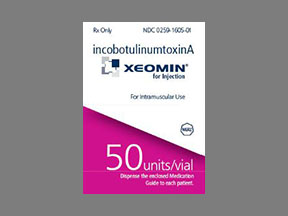 Xeomin
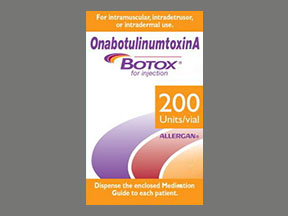 Botox
BotoxComparison Table
| Feature | Xeomin | Botox |
| Active Ingredient | Purified botulinum toxin A | Botulinum toxin A with proteins |
| Duration Of Action | 3–6 months | 3–4 months |
| Onset Of Effect | 2–5 days | 3–5 days |
| Max Daily Otc Dose | Not for OTC use | Not for OTC use |
| Pediatric Use | 18+ only | 18+ only |
Price comparison
Comparing prices for Xeomin (1 Solution Reconstituted 50UNIT) and Botox (1 Solution Reconstituted 200UNIT). For other forms and dosages please refer to Xeomin and Botox pages.
 Walgreens
 Albertsons
 Walmart
Xeomin savings card
Show this coupon to your pharmacistWalgreens
$270.18
BIN
ID
PCN
GRP
019876
LHF35FDDC9
CHIPPO
LHX
Dosage guidelines
| Dosage | Xeomin | Botox |
| Adult Dosage | Varies by treatment area | Varies by treatment area |
| First Dose | Given per session | Given per session |
| Maximum Daily Dose | Not applicable | Not applicable |
| Pediatric Dosing | Not specified | Not specified |
| Special Notes | No additives, less resistance | Contains proteins, well-known brand |
Side effects comparison
When considering Xeomin and Botox for wrinkle treatment, understanding the potential side effects is an important part of making an informed decision. Both of these injectables are based on the same active ingredient, a type of botulinum toxin, and are injected into targeted facial muscles to relax them and smooth out fine lines. Because of their similarities, they share many of the same side effects, but there are also nuanced differences due to how each product is formulated.
Most commonly, people experience mild and temporary side effects after receiving either Xeomin or Botox injections. The most frequent issues include redness, swelling, and bruising at the injection site. It’s also possible to experience mild bleeding, itching, or discomfort where the needle was placed. Some people report headaches or a feeling of heaviness in the treated muscles. These symptoms typically resolve on their own within a few hours to a few days, and are generally considered normal reactions to the injection process rather than indications of a more serious problem.
Occasionally, people may experience side effects beyond the common localized symptoms. The list of possible side effects for both Xeomin and Botox includes:
Muscle weakness or stiffness near the injection site
Rash, itching, or dry eyes or mouth
Headaches, neck pain, or back pain
Difficulty swallowing
Respiratory infections (rare)
Allergic reactions, such as hives or wheezing (rare)
While the risk of serious side effects is low, Xeomin may offer some added protection for certain individuals. Xeomin is made using a purified form of botulinum toxin without added proteins, which is why it’s sometimes called the “naked injectable.” This unique feature means that Xeomin might be less likely to cause allergic reactions compared to Botox, which contains additional proteins as part of its complex. For people who have had allergic responses or developed a resistance to Botox—meaning the treatment becomes less effective over time—Xeomin could be a safer or more effective alternative. However, allergic reactions are rare with both products, and not everyone is at risk.
It's important to follow aftercare instructions to minimize side effects or prevent complications. After treatment, avoid rubbing or massaging the area, and stay away from strenuous exercise or activities that might increase blood flow to the face for at least 24 hours. This helps to keep the injected product in place and reduces the risk of it spreading to unintended areas. If you notice any persistent or unusual symptoms such as muscle weakness far from the injection site, difficulty speaking or breathing, or vision changes, seek medical attention promptly.
In summary, both Xeomin and Botox are considered safe and effective when administered by trained professionals. The differences in formulation between the two may influence the likelihood of allergic reactions and long-term tolerance but are unlikely to lead to significant differences in short-term side effects for most people. The best choice for you may depend on your medical history, previous experience with wrinkle treatments, and any concerns you have about allergies or resistance. Always discuss your individual risk factors and preferences with your healthcare provider before deciding which injectable may suit you better.
Interactions comparison
Both Xeomin and Botox are injectable medications made from botulinum toxin type A, which is used to temporarily relax certain muscles. While they share this main ingredient and have many similarities in how they are used for cosmetic purposes, there are some differences in the specific conditions they are approved to treat and how widely each is used for medical and cosmetic concerns.
In the cosmetic field, both Xeomin and Botox are popular choices for smoothing facial wrinkles and lines caused by repeated muscle movement, known as dynamic wrinkles. These include:
Frown lines that appear between the eyebrows (sometimes called glabellar lines or "11" lines)
Crow’s feet, which are the little lines that form at the corners of your eyes when you smile
Forehead lines that appear when you raise your eyebrows
Both treatments are FDA-approved for use in these areas, and your doctor might recommend either one based on your previous experiences, skin type, and aesthetic goals. For cosmetic treatments, the expected outcome is a smoother and more youthful appearance, achieved by reducing the muscle movement that causes these wrinkles.
On the medical side, there are notable differences in the range of conditions each drug treats. Botox has been studied and approved for a broader range of health conditions beyond cosmetic uses. These include:
Treating eye twitching (blepharospasm), where the eyelid muscles spasm or twitch involuntarily
Managing neck spasms (cervical dystonia), which can cause the head to turn or tilt uncontrollably
Treating muscle stiffness and certain types of arm spasms
Addressing chronic migraines and overactive bladder (at higher doses and with specific formulations), although these are medical indications mainly associated with Botox and not with Xeomin
Xeomin, while very similar in how it works for cosmetic reasons, is not as widely used or officially approved for these broader medical indications. The main approved medical condition for Xeomin, outside of wrinkle treatment, is eye twitching (blepharospasm) and certain kinds of muscle stiffness. Xeomin does not have official approval in the United States for managing chronic migraines, overactive bladder, or excessive sweating (hyperhidrosis) — conditions where Botox is often the recommended and studied choice.
To help you compare at a glance, here’s a simple breakdown:
Both Xeomin and Botox are approved for:
Smoothing frown lines, crow’s feet, and forehead wrinkles (cosmetic use)
Treating involuntary eye twitching (blepharospasm)
Managing certain localized muscle spasms
Botox is also approved for:
Treating neck muscle spasms (cervical dystonia)
Reducing muscle stiffness in the arms and other areas
Chronic migraine prevention
Overactive bladder symptoms
Severe underarm sweating (hyperhidrosis)
It’s important to remember that while doctors sometimes use drugs “off-label” for conditions not included in official approvals, the established safety and effectiveness of these drugs is highest for their approved uses. For most people seeking cosmetic enhancement of facial wrinkles, both Xeomin and Botox are good options. However, if your treatment needs include medical conditions such as neck spasms, recurring migraines, overactive bladder, or excessive sweating, Botox has more extensive approval and proven use in these areas. Always discuss your specific goals and medical history with your doctor to choose the medication that is right for your particular needs, and do not switch between products without medical guidance.
When to choose each medication
- You want a purer formulation with no accessory proteins (Xeomin).
- You have developed resistance to other botulinum toxin injectables.
- You are concerned about potential allergic reactions to added proteins.
- You prefer a product that may have a slightly faster onset of results.
- You are looking for a potentially lower per-unit cost.
- You prefer a brand with a long track record and extensive clinical use (Botox).
- You want highly precise localization for targeted treatment areas.
- You are more comfortable with a widely recognized and familiar option.
- You have had good past experience with Botox.
- You want to stick with a product that many providers are experienced with.
Frequently Asked Questions
Which lasts longer Xeomin or Botox?
Both Xeomin and Botox are neuromodulators used to reduce the appearance of wrinkles. In general, both treatments last about 3 to 4 months, although the duration can vary depending on individual factors such as metabolism, muscle activity, and the area being treated. There is no significant difference in duration between the two.
Is 20 units of Xeomin the same as 20 units of Botox?
Yes, 20 units of Xeomin is generally considered equivalent to 20 units of Botox in terms of dosage for treating similar conditions. Both are brands of botulinum toxin type A, and they are typically used in similar dosing units. However, the response to these treatments can vary between individuals, so it's important for a healthcare provider to assess and determine the appropriate dosage for each patient.
Is 20 units of Xeomin a lot?
The administration of 20 units of Xeomin is not uncommon, but whether it is considered a lot depends on the specific treatment area and the patient's individual needs. Dosage can vary based on factors such as the condition being treated, the size of the muscle, and the desired outcome. It is essential for a healthcare provider to determine the appropriate dosage for each patient.
What is the unit conversion for Xeomin to Botox?
Xeomin and Botox are both botulinum toxin type A products used for similar indications, but they are not interchangeable on a unit-per-unit basis. The conversion between Xeomin and Botox units is not standardized, and a healthcare provider must consider various factors such as the patient's needs and the specific treatment area. It is important for a qualified healthcare professional to determine the appropriate dosage when switching between these products.
Does Botox work better than Xeomin?
The effectiveness of Botox and Xeomin can vary from person to person. Both are forms of botulinum toxin type A and are used to treat similar conditions, such as reducing the appearance of facial wrinkles. In terms of efficacy, they are generally considered comparable, but individual responses can differ. Some patients may find one works better for them than the other, which can be influenced by factors like how their body metabolizes the product or personal preferences. It is advisable for patients to consult with their healthcare provider to determine which option might be best suited to their needs.
Does Xeomin look more natural than Botox?
Xeomin and Botox are both types of botulinum toxin used to reduce the appearance of wrinkles. Whether Xeomin looks more natural than Botox can vary from person to person and depends on individual response and the skill of the injector. Some patients report that Xeomin provides a more natural look due to its formulation, which lacks the additional proteins found in Botox. However, results can differ based on personal factors and specific treatment goals. It's advisable to consult with a qualified medical professional to determine which option might be better suited for the desired outcome.
How many units of Xeomin vs Botox?
When comparing Xeomin and Botox, it is generally accepted that they are used in equivalent units for similar results. This means that 1 unit of Xeomin is approximately equivalent to 1 unit of Botox. However, the exact dosage may vary based on the specific treatment area and the individual's response to the medication. It is important for patients to consult with a healthcare provider to determine the appropriate dosage for their specific needs.
Why is Botox more expensive than Xeomin?
Botox is generally more expensive than Xeomin due to factors such as brand recognition, market demand, and manufacturing costs. Botox, being one of the first botulinum toxin products on the market, has established a strong brand reputation and is widely recognized. This can contribute to its higher pricing. Additionally, different formulations, marketing strategies, and the costs associated with clinical trials may also influence the price difference.
Why is Xeomin better than Botox?
Xeomin and Botox are both botulinum toxin type A products used for reducing wrinkles, but they have some differences which may make one preferable over the other depending on the individual's needs. Xeomin is free from accessory proteins, which means it contains only the active ingredient without any additives. This can reduce the risk of developing antibodies that might decrease the effectiveness over time. Additionally, some people may prefer Xeomin if they have had allergic reactions to other botulinum toxin products with added proteins. Ultimately, the choice between Xeomin and Botox should be made with a healthcare professional, taking into account the individual's medical history and personal preferences.
How much is Xeomin compared to Botox?
The cost of Xeomin compared to Botox can vary based on factors such as geographic location, provider expertise, and clinic pricing. Generally, Xeomin and Botox are priced similarly per unit. However, the number of units required for treatment may differ between the two, affecting the overall cost. It is advisable to consult with a healthcare provider for precise pricing and to determine the most appropriate treatment option.
Is Xeomin cheaper than Botox?
The cost of Xeomin and Botox can vary depending on factors such as geographic location, provider fees, and the number of units required for treatment. Generally, Xeomin is often priced slightly lower than Botox on a per-unit basis. However, patients should consult with their healthcare provider for an accurate cost comparison based on their specific needs and location.
How much do 20 units of Xeomin cost?
The cost of 20 units of Xeomin can vary depending on factors such as geographic location, the provider's fees, and whether any additional services are included. On average, patients might expect to pay approximately $200 to $400 for 20 units. It is advisable for one to consult with a local healthcare provider for precise pricing.
References
- Bowtiquemedspa: Xeomin and the Pros and Cons Compared to BOTOX | Blog
- Cleveland Clinic: Xeomin vs. Botox, and What To Know About Both
- Eternaldermatology: Botox vs Xeomin: Which is Right for You? | Fulton MD
- Princetonbrainandspine: Botox / Xeomin Injections
- Hendersonwomenscare: Comparing Botox® & Xeomin
- Facialesthetics: Xeomin® vs BOTOX® - How Do They Compare?
- Specialistsinplasticsurgery: Botox vs. Xeomin vs. Dysport