

Zepbound vs Wegovy: Compare Differences & Prices
Key Takeaways
- Zepbound and Wegovy are both once-weekly injectable medications used for weight loss, but Zepbound is approved for adults only, while Wegovy can be prescribed for certain adolescents (ages 12 and up) as well as adults.
- Clinical studies suggest Zepbound may lead to greater average weight loss (about 20%) compared to Wegovy (about 14%) over a similar period, though individual results can vary.
- Wegovy is approved for reducing the risk of major cardiovascular events in people with heart disease, while Zepbound is also approved for treating obstructive sleep apnea in addition to weight loss.
- Both medications have similar side effects, including nausea, vomiting, diarrhea, and constipation. They should not be used together due to increased risk of side effects.
- The choice between Zepbound and Wegovy depends on factors like age, health history, and specific conditions such as heart disease or sleep apnea. Consultation with a healthcare provider is important to determine the best option.
Key Similarities
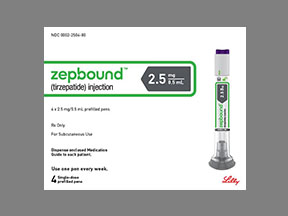 Zepbound
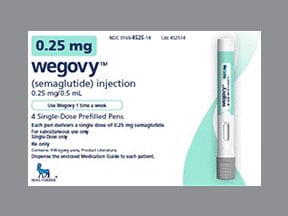 Wegovy
Comparison Table
| Feature | Zepbound | Wegovy |
| Active Ingredient | Tirzepatide | Semaglutide |
| Duration Of Action | Approximately 1 week per dose | Approximately 1 week per dose |
| Onset Of Effect | About 1 month | About 1 month |
| Max Daily Otc Dose | Not available over-the-counter | Not available over-the-counter |
| Pediatric Use | Approved for adults only | Approved for ages 12 and up |
Price comparison
Comparing prices for Zepbound (4 Pens 0.5ML of 2.5MG/0.5ML) and Wegovy (4 Pens 0.5ML of 0.25MG/0.5ML). For other forms and dosages please refer to Zepbound and Wegovy pages.
 CVS
CVS Albertsons
 Walgreens
 Walmart
Zepbound savings card
Show this coupon to your pharmacistAlbertsons
$1,069.46
BIN
ID
PCN
GRP
019876
LH78E18B4E
CHIPPO
LHX
Dosage guidelines
| Dosage | Zepbound | Wegovy |
| Adult Dosage | Start at 2.5 mg once weekly; increase to 5 mg after 4 weeks, then may increase in 2.5 mg increments up to 15 mg once weekly as needed. | Start at 0.25 mg once weekly; increase every 4 weeks to 0.5 mg, 1 mg, 1.7 mg, then 2.4 mg once weekly. |
| First Dose | 2.5 mg once weekly. | 0.25 mg once weekly. |
| Maximum Daily Dose | 15 mg once weekly (no daily dosing; weekly administration). | 2.4 mg once weekly (no daily dosing; weekly administration). |
| Pediatric Dosing | Not approved for pediatric use. | Approved for adolescents aged 12 years and older; same titration as adults up to 2.4 mg once weekly. |
| Special Notes | Only approved for adults; may provide greater average weight loss; also approved for weight management in obstructive sleep apnea. | Approved for adults and adolescents ≥12 years; may have additional benefits for people with heart disease or certain liver conditions. |
Side effects comparison
When choosing between Zepbound and Wegovy for weight loss, understanding the similarities and differences in their side effects can help you and your healthcare provider decide which medication might be the better fit for your individual needs. Both medications work by acting on hormones in the gut that influence hunger and fullness, and because of this, their side effects tend to overlap. However, there are some differences in how people tolerate these drugs, and knowing what to expect can help you manage any unwanted symptoms.
Both Zepbound and Wegovy are given as once-weekly injections under the skin. The most common side effects associated with both medications include gastrointestinal symptoms. Many users report nausea, constipation, diarrhea, and vomiting, especially when first starting the treatment or after a dose increase. These effects are usually mild to moderate and often improve over time as your body gets used to the medication. To help reduce these symptoms, both medications are started at a lower dose and increased gradually over the course of several weeks.
Here is a summary of the typical side effects you might experience:
Nausea: This is the most frequently reported side effect for both Zepbound and Wegovy, with many people experiencing it during the first few weeks.
Constipation and Diarrhea: Changes in bowel movements are common and can include both constipation and, less often, diarrhea.
Vomiting: Although less common than nausea, some individuals may experience vomiting, which also tends to lessen over time.
Stomach pain and indigestion: Some users notice discomfort or a feeling of fullness after eating small amounts.
There are also some differences in how these side effects can impact people. In recent clinical studies, the overall rate of people stopping their medication because of side effects was slightly lower for Zepbound than for Wegovy (about 6% for Zepbound and 8% for Wegovy). This means that most people on either medication are able to manage the side effects with the help of their healthcare team and continued use. One possible reason for this could be how Zepbound, which mimics two gut hormones instead of one, interacts with the body. However, individual experiences can vary, so monitoring how you feel and staying in touch with your healthcare provider is key.
Though rare, there are serious side effects to be aware of. Both medications can increase the risk of certain health conditions, such as pancreatitis (inflammation of the pancreas), gallbladder disease, and low blood sugar, especially if you are taking medications for diabetes alongside weight loss injections. Signs of these complications can include severe stomach pain, yellowing of the skin or eyes, or confusion. If you experience any of these symptoms, seek medical attention promptly.
Another important consideration is the specific conditions each medication is approved to treat, which may influence side effect monitoring. Wegovy is approved for adults and adolescents 12 years and older, making it an option for younger patients with certain health needs. Zepbound is approved only for adults, and it has additional proven benefits for people with obstructive sleep apnea, which may influence the choice of medication in those with this condition.
In summary, while Zepbound and Wegovy share many common side effects, most are manageable and tend to improve with time. Both have a similar safety profile when it comes to the most frequently reported symptoms, but a slightly lower discontinuation rate due to side effects has been observed with Zepbound in clinical studies. You should discuss your medical history, other medications, and any concerns with your healthcare provider to ensure the safest and most effective use of either medication for your weight management journey.
Interactions comparison
When choosing between Zepbound and Wegovy for weight management, it's important to understand which conditions each medication treats and the groups of people they are approved for. Both Zepbound (tirzepatide) and Wegovy (semaglutide) are prescription, once-weekly injection therapies designed to help people lose weight by working on appetite, hunger, and feelings of fullness. However, they differ in some of their specific uses and the populations they serve.
Zepbound is approved for use in adults with obesity or those who are overweight and have at least one weight-related medical problem, such as high blood pressure, high cholesterol, or obstructive sleep apnea. Specifically, Zepbound is also the first medication of its kind to be approved by the FDA for managing moderate-to-severe obstructive sleep apnea in people who are overweight or obese. This makes Zepbound a better option for adults who not only need help with weight loss but also struggle with sleep apnea, as clinical studies have found that it can lower the severity of this condition—and in some cases, help resolve it altogether. Zepbound works by acting like two hormones in the body (GLP-1 and GIP), which together can reduce appetite, improve feelings of fullness, and help lower blood sugar, making it effective for weight loss and related metabolic conditions.
Wegovy, on the other hand, is approved for both adults and adolescents aged 12 years and older. For adolescents, eligibility for Wegovy requires having a body mass index at or above the 95th percentile for their age and sex, which means meeting the medical definition of obesity—this is not just for those who are overweight, but for those who meet criteria for adolescent obesity. In adults and adolescents, Wegovy is mainly prescribed to help with chronic weight management for those with obesity or for those who are overweight and have at least one weight-related health problem.
A unique feature of Wegovy is its approval for people with certain chronic health conditions in addition to obesity. For example, Wegovy is the only GLP-1 medication currently approved to reduce the risk of serious heart problems—such as heart attack and stroke—in adults who have obesity or are overweight and also have a history of heart disease. This is a significant benefit for people with both weight and heart health concerns. Wegovy also has approval for treating a liver condition called metabolic dysfunction-associated steatohepatitis (MASH) when there is moderate-to-severe scarring (fibrosis) present, offering a treatment option for those with this combination of liver disease and obesity.
To summarize the conditions treated and the populations served by each medication:
Zepbound: Approved for adults with obesity or overweight and at least one weight-related health condition; uniquely approved for managing moderate-to-severe obstructive sleep apnea in this group.
Wegovy: Approved for adults and for adolescents (12 years and older) with obesity (BMI at or above the 95th percentile for age/sex); for adults, also approved to reduce the risk of major heart problems in those with obesity or overweight and heart disease history; approved to treat MASH with liver fibrosis in adults.
Your healthcare provider will consider your overall health, age, the conditions you want treated, and your medical history when deciding which therapy may be right for you. For example, if you are an adult with significant sleep-related breathing problems, Zepbound may be preferred. Meanwhile, if you have heart concerns or are a teenager with obesity, Wegovy would likely be the recommended choice. Always discuss your medical conditions and treatment goals with your provider to determine which option best fits your needs.
When to choose each medication
- Greater weight loss desired
- Has obstructive sleep apnea
- Adult (age 18+ only)
- Lower risk of discontinuation
- No history of cardiovascular disease
- History of cardiovascular disease
- Has liver condition (MASH)
- Adolescent (age 12+)
- Proven cardiovascular benefits
- Wider age range approval
Frequently Asked Questions
How much weight can you lose in a month with Zepbound?
The amount of weight a person can lose with Zepbound (bimagrumab) varies depending on individual factors such as diet, exercise, and adherence to the medication regimen. Clinical trials have shown that participants can experience significant weight loss, but it is important to follow a healthcare provider's guidance for safe and effective use. For precise expectations, consultation with a healthcare provider is recommended.
Which is cheaper out of pocket, Zepbound or Wegovy?
The out-of-pocket cost for medications like Zepbound and Wegovy can vary significantly depending on factors such as pharmacy location, insurance coverage, and available discounts or coupons. Generally, both medications can be expensive without insurance. It is recommended to check with local pharmacies for current pricing and explore patient assistance programs or discounts that may be available for these medications.
How does Zepbound work differently than Wegovy?
Zepbound and Wegovy both contain the active ingredient semaglutide, which is a GLP-1 receptor agonist used to aid in weight management. However, they are formulated and dosed differently. Zepbound is typically used for patients with a condition like obesity and may have different dosing and administration protocols compared to Wegovy, which is specifically approved for chronic weight management. Differences in the formulation can affect how they are absorbed and utilized in the body, but they fundamentally work through the same mechanism of action by mimicking the GLP-1 hormone to regulate appetite and food intake.
Which is safer, Zepbound or Wegovy?
When considering the safety of Zepbound and Wegovy, it is important to note that the safety profile of any medication can vary based on individual health conditions, medical history, and other factors.
Both Zepbound and Wegovy are medications used for weight management, and each has its own set of potential side effects and contraindications. Generally, the safety of these medications should be discussed with a healthcare provider who can evaluate a person's specific health needs and risks. It is essential to have a thorough evaluation and consultation with a healthcare professional to determine which medication, if any, is more appropriate and safer for individual use.
Which weight loss drug is better than Wegovy?
The effectiveness of weight loss medications can vary based on individual health conditions, goals, and responses to treatment. Wegovy (semaglutide) has been shown to be effective for many individuals. Other medications that may be considered include Saxenda (liraglutide), Contrave (naltrexone/bupropion), and Qsymia (phentermine/topiramate). It is essential for the individual to consult with a healthcare provider to determine the most appropriate medication based on their specific health profile and needs.
Why do people switch from Wegovy to Zepbound?
People may switch from Wegovy to Zepbound for several reasons, including differences in effectiveness, side effects, availability, or cost. Individual responses to medications can vary, so a healthcare provider might recommend switching if one medication is not achieving the desired weight loss outcomes or if the patient experiences intolerable side effects. Additionally, insurance coverage or personal preferences may also play a role in the decision to switch medications. It's important for individuals to discuss any changes in their medication regimen with their healthcare provider.
Is Wegovy easier to get approved than Zepbound?
The approval process for medications like Wegovy and Zepbound depends on various factors, including the specific medical guidelines, insurance policies, and individual patient circumstances. Typically, both medications require a healthcare provider's assessment and a determination of medical necessity. Insurance companies may have different criteria for approving these medications, which can affect ease of access. It is advisable for patients to consult with their healthcare provider and insurance company to understand the specific approval process for each medication.
How to lose the most weight on Zepbound?
When using Zepbound (bimagrumab), a patient should adhere to a balanced approach for weight loss. This includes following a healthy, calorie-controlled diet and engaging in regular physical activity. It is important to consult with a healthcare provider to tailor a plan that suits individual health needs and goals. Additionally, consistent follow-up with the healthcare provider can help monitor progress and adjust the treatment plan as necessary.
How to get Zepbound for cheap?
To obtain Zepbound at a lower cost, one might consider several strategies. Checking with different pharmacies for price variations is recommended, as prices can differ. Additionally, exploring patient assistance programs offered by the manufacturer might provide financial aid or discounts. Using generic alternatives, if available, can also be a cost-effective option. Consulting a healthcare provider about any available samples or coupons could be beneficial as well.
How much is Zepbound and Wegovy without insurance?
The cost of Zepbound and Wegovy without insurance can vary based on location, pharmacy, and any available discounts. Generally, the out-of-pocket cost for Zepbound can be quite high, often exceeding several thousand dollars for a month's supply. Similarly, Wegovy typically costs over $1,300 for a monthly supply without insurance. It is advisable to check with local pharmacies for the most accurate pricing and explore any available manufacturer discounts or savings programs.
How much is Wegovy monthly in Canada?
The cost of Wegovy in Canada can vary based on factors such as insurance coverage, pharmacy pricing, and location. It's advisable for individuals to check with local pharmacies or their insurance provider to get an accurate monthly cost specific to their situation.
How much does Zepbound cost in Canada?
The cost of Zepbound in Canada can vary widely based on factors such as the pharmacy, the dosage, and whether a patient has insurance coverage. It is recommended to contact local pharmacies directly for the most up-to-date pricing information. Additionally, patients may want to consult with their healthcare provider or insurance company to explore coverage options.
Is Zepbound more effective than Wegovy?
Comparing the effectiveness of Zepbound and Wegovy for weight management or related conditions would depend on individual patient factors and specific clinical goals. Both medications are used for weight management in adults with obesity or overweight conditions and should be prescribed based on a healthcare provider's assessment of the patient's needs, health status, and response to treatment. It's essential for patients to consult with their healthcare provider to determine the most appropriate treatment option for their situation.
References
- Advisory: Zepbound vs. Wegovy: Which is more effective?
- Reliablemd: Zepbound vs Semaglutide GLP-1 vs Wegovy
- Uchealth: What is Zepbound? Does this new weight loss drug work ...
- Ctfacialplasticsurgery: Zepbound vs Wegovy for Weight Loss
- Baptisthealth: Zepbound vs. Wegovy: How Do They Compare?